
|
In preparation for a call with PJ Coogan from Cork's 96FM I started putting together some notes. As I have normally let these moments slip into the ether I will record this as a blog post for any listeners to read the notes back, and hopefully it can be a help to others.
Before I start; I work with Individuals. This will have a lot of generalisations because it's not for specific person. We're in a weird time because with COVID, housing supply and everything else. Some people have been hit super hard, and others are thriving. If anything here works for you, take it. If it doesn't work for you (or enrages you), it's just not for you. 1. Soft Questions - figure out your long-term needs and plans Do you want to put down roots? More people and their jobs are mobile and international now. This means we have to question a lot of assumptions. There are more immigrants and people in relationships with people from other countries living here than ever. If you or your partner's family is in another country; ask yourself will you be in Ireland in 5 years? Ask yourself: "What will my life look like in 5-10 years?" If you are in a stable job, having kids, or want to live in an area near friends/family/city/town/whatever - buying a home could be a great idea. If you are in more of an uncertain situation, unsure where you may be working or living in the near future - maybe buying a home is a bad idea right now. The Financial Crisis showed us house hopping doesn't often work. The “Property Ladder” is a myth for most. Buying a home puts down roots. Ask yourself if this is what you want and where do you want those roots to be. Plan to buy a "forever home". If you can upgrade later and want to, great. You don't want to buy a 1-bed home just before having kids and not being able to move. Ask yourself as many questions as you can think of. What kind of property do you want? Where? Timeline? Cost ranges? Answering the soft questions can stop people buying at the wrong time, in the wrong place, and direct you to a better long-term solution. 2. Know the Lending Rules It is not magic. I constantly talk to people who misunderstand the rules or don't know them. i) Deposit - 10% FTB, 20% Switcher, 30% investor. ii) Income rules - 3.5X, 4X is the exception. Don't plan for the exception. iii) Affordability - Monthly savings should be more than mortgage payment - this can include rent. Do the math and know what you can afford. 3. Good Financial Health - get your money in order i) Set up an automatic savings each month. This should be at least rent plus any difference in mortgage cost. If you’re not there now, try chart a path to this. ii) If above is not met, try cut expenses elsewhere. iii) Increase income/change job if timeline allows it. The jobs market is currently hot and employers are having to pay up. If you're not getting it where you're at, look at a job move. The public sector is secure here and knows when and what they will be getting, but private sector employees often need to agitate for this to shake things up. The better your money situation, the easier and quicker you'll get a home. iv) If you have other loans, try to pay them down faster. v) Financial hygiene. There are a million articles covering this stuff so here are the basics. Get all pay into a bank account, no silly names on bank transfers to friends, lose the overdraft charges/keep a savings buffer, make a specific mortgage savings account and put a regular amount in, don't withdraw from it. Banks look at the last 6 months as a minimum so clean it up. 4. Get help/accountability Sit down with a pen and paper and figure out your current situation. Do the maths, tidy up your finances. The first step to accountability is figuring out your current situation. You can do this yourself or with your significant other if in a relationship. Talk to a family member or friend good with money. Talk to the bank or mortgage advisor. Talk to us. You don't know what you don't know. I had a client go from a 2-year timeline to a few months when we worked in the HTB scheme into the math. He didn't know what he didn't know. Working with someone with expertise can ensure you don't miss out on any state supports you are able to use (eg. Local Authority Loan/Rebuilding Ireland, Help to Buy scheme). There are also additional costs which often catch people by surprise. Add everything up. (eg. Solicitor, valuation, property inspections, stamp duty, insurances, etc) You can use a professional, a friend who has recently gone through the process, or even just monthly reminder on your phone. Get organised and put yourself in the right position. A quick message of hope - it may be hard, but it is doable. There is a lot of bad news around housing, but there are many people happily moving into new homes all the time. Get yourself organised and get ready. Good luck on your home journey! You can listen to the call with PJ here. On this week's Friday Personal Finance Friday Question we talk about how you can get back into work after a break.
Main points to know:
Helpful Resources: Irish Times Women's Podcast - Ep 181 https://www.irishtimes.com/life-and-s... Women Returners Ireland Network http://wrpn.womenreturners.com/ireland/ *This is an early video for us. Our video skills and equipment improve with time, please be forgiving. We offer financial planning and education, the media stuff is a work in progress. Watch this video on YouTube. Watch this video on FaceBook. This is a Personal Finance Friday question from one of our Financial Planning clients a few years into the workforce.
Pensions don’t have to be complicated so let us cover the basics. Main points to know:
*This is an early video for us. Our video skills and equipment improve with time, please be forgiving. We offer financial planning and education, the media stuff is a work in progress. Watch this video on YouTube. Watch this video on FaceBook. This is a Personal Finance Friday question from several of our Financial Planning clients. A tracker mortgage (or tracker variable rate mortgage) is a mortgage where the interest rate is tied to a tracked rate, such as the E.C.B. rate plus a set amount. If the E.C.B rate is 2%, and your set amount is +1%, you’ll pay 3% interest on your mortgage. Simple! *This is an early video for us. Our video skills and equipment improve with time, please be forgiving. We offer financial planning and education, the media stuff is a work in progress. Watch this video on YouTube. Watch this video on FaceBook. This is a Personal Finance Friday question from several of our Financial Planning clients. So what is Bitcoin? And are you missing out if you don’t invest in it now?** A currency has two key aspects:
Main points to know:
*This is an early video for us. Our video skills and equipment improve with time, please be forgiving. We offer financial planning and education, the media stuff is a work in progress. **This video was released in early January 2018. This stuff is moving quickly. Watch this video on YouTube. Watch this video on FaceBook. Before rushing into investing you should try cover the basics first:
www.facebook.com/MoneyBootCamp/videos/1730174333700515/ This is an early video for us. Our video skills and equipment improve with time, please be forgiving. We offer financial planning and education, the media stuff is a work in progress. Watch this video on YouTube. Watch this video on FaceBook. At Money Boot Camp we are looking to increase people’s knowledge and ability to manage their finances to live better lives. As part of this effort we are going to take your questions and release a video each Friday answering one or more questions. If you want to have a question answered on any financial topic, send it our way through our contact form, or any of our social channels, Facebook, Youtube and Instagram. Whether you have questions on a personal situation you want answered, or a general question on a topic like savings, mortgages, investing, family planning, whatever; send it our way and we’ll give you a qualified and non-biased answer.  Defining a path without grades is a struggle. In fact, it’s one of the most common struggles I see in people years into the workforce.
When you are in education there was always a path. You go from one year to the next, learning a bit more (hopefully) every year. You have grades to know how you are doing. If you’re doing well, you’re encouraged to follow up on it. If you’re doing poorly, either improve or at some point give up on the subject. Either way, the path is clear. Everything is quite simple as you only need to look a year or two ahead of where you are. Your path is simple because you need to pass every year as it comes, and make few decisions about where your path leads. Then when you get to the next year, there are few options. Your path is simple. Maybe you choose some subjects, or specialise, or when you finish education you look for work in a narrow area. The path is simple. Your grades let you know how you’re doing so you have your options narrowed again. The way to is guided by grades, but these measures of success are set by someone else and given to you. Then you leave education and go to work. Suddenly the path is no longer clear, the grades are infrequent, unclear and often unhelpful. You no longer have a simple path defined by pre-set years of steady progression. Now you have too many options and no path. Do you stay in the same city or country? Do you look for a job in one company or a thousand others? Should you stay in a job for a few more years and hope for a promotion or try move to another company you might not like? Do you move in with your partner and get married? Do you have kids now, never or in five more years? Rather than simply focussing on one thing now, you must define a path in your career, personal, financial, and relationship life. It’s easy to let one or more areas slip. Your plans used to be from year to year, but now you need to think decades ahead. You also need to learn to grade yourself. Are you successful if you have a great job, more money than you need, but you never settled down and had the family you wanted? Are you a success if you travelled and saw the world, but you’ve no money in the bank and have no career in your thirties? It’s harder to grade yourself when there are multiple counteracting goals and dreams. Often you can focus on one area to the detriment of others, until it’s too late and you’re already behind. If this is something you struggle with you’re not alone. You can define your own path, and choose your own methods of grading your progress. You have to. Nobody else will.  At Money Boot Camp we’re trying to support people achieving their goals. We focus on sorting the finances, so you can improve the rest.
During the year we came across a film maker with a lofty goal. He is encouraging more aspiring film makers to take the leap and make films on their mobile phones. With the technology we all carry around with us all day in our phones, the festival organiser, Rob Fitzhugh says everyone now has the capability to make films to tell their story. We’re working with Debatable Ape Productions on an exciting project and got first-hand experience of the skills and passion of Rob, and most importantly his ability to film some impressive professional video on a mobile phone. After hearing about the Dublin Smartphone Film Festival from him and seeing what could be done with a mobile phone, we decided to get involved. We are proud to announce we are supporting the Dublin Smartphone Film Festival as a corporate sponsor. We want to support events in Ireland and help people achieve their goals. If you are an aspiring film maker, check out the festival info below and on their website. The festival takes place, January 27th 2018 at the Generator in Smithfield, Dublin. Submissions are open until December 1st 2017 https://www.dublinsmartphonefilmfestival.com/ “The Dublin Smartphone Film Festival is a brand new international festival dedicated to celebrating work shot on Smartphone and Tablets. No longer is expensive technology a barrier to creativity. The mobile phone has expanded the scope and freedom for filmmakers, providing limitless possibilities in the palm of your hand. The festival was created with the goal of encouraging filmmakers to share the stories they have captured on mobile devices and to provide smartphone filmmakers with a platform to exhibit these stories to a wider audience. The festival takes place, January 27th 2018 at the Generator in Smithfield. Submissions are open until December 1st to anyone with a Smartphone/Tablet a compelling story to tell.”  Lowering your expenses can seem tough at first. You think you live a normal lifestyle and don’t spend too lavishly, so how can you lower your expenses? Well you’re in the right place because we have a few ideas that might get your brain juices flowing and more money in your pocket!
In part 1 of this series we talked about why expenses are important. Now we’re going to cover a few things you can do to lower your expenses and allow you to save more. We’ll cover 5 different areas and suggest a few points for each. This is not meant to be a definitive list, and it’s also not all going to be relevant for you. Some things will work great for you, and others might be a complete flop. Nothing ventured, nothing gained. Give things a shot, even if you think they may not work. I see people making big savings all the time from things they never thought would work! The important concept to get from this is that there are always areas where money is leaking out of your hands and into the hands of others. 1. Aim for the big things There are some big expenses in life that have such a disproportionate effect on your finances that cutting them a little can have a huge benefit. Always a good place to start. Rent: If you are renting, ask for a rent reduction when your renewal comes up, or when a rent increase is proposed ask for it to stay the same. You might think this is unlikely to happen but landlords often don’t want the pain of having to change renters or risk having a vacancy even for a few months. If you are good tenants and ask for a smaller or neutral rent hike when it comes around, you might have better odds than you suspect. I’ve seen people offer to fix up little issues in rentals in exchange for different rent prices and get accepted just because the landlord doesn’t want to put in the effort. Mortgage: If you own your own home, you know there are lots of fees, bills and costs to be paid. By re-mortgaging when rates are preferable, switching insurance providers and paying off slightly more when possible, you can save yourself tens of thousands of euro over a few short years. Nice! Car: Cars are most people’s second largest expense. By spending less on a car in the first place, or avoiding the 2nd car you can typically save a few thousand upfront. This also has the added benefit of reducing payments as many will finance their car purchases. Buying a brand-new car is also not the best financial decision as the price can drop around 20% just driving it off the lot. Ouch. Depreciation is a major hidden cost of having a car. By looking at cars that are older than a year or 2, you can save a pile of cash as the price has reduced a lot and the car is basically the same quality. Bills and recurring expenses: Bills like electricity, heating, internet and insurance are a constant part of your expenses. A great way of building in savings from these is to switch at the end of contracts and chase deals. Most providers are exactly the same in terms of service so it often is simply a price comparison. Some providers will guarantee discounts for bundling products (eg. Combining internet and phone provider). This can be a great way of savings 10-15% on your bills at times. Mobile phone bills are another area to watch. It can often be a lot cheaper to buy your phone up front and just pay for a sim only setup rather than paying for a more expensive plan with the phone “included”. Move to a less expensive area: The area you live in can subconsciously guide you into a particular lifestyle. The inherent social pressure to follow the cultural norms will lead you to do whatever the people around you do. 2. Aim for the little things While a few big things can have a large effect on your spending, there are a thousand little things that cause money to leak away from you. These constantly drain your money little by little and it all adds up. Sell some stuff, replace old lightbulbs with more efficient ones, discover actions to lower your energy bill, turn off electrical items when not using them or not in the house, lower your heating by 1 degree, get rid of any club memberships you’re not using, get rid of subscription TV or go to the lowest price package, stop magazine subscriptions, cook your own meals, bring lunch to work, buy generic or home-brand where possible, eat out less. Ask for a discount, just do it! Ask if they have a student discount, they may not ask for evidence….and you didn’t say you were a student Finding a few areas like this where you can save on recurring expenses can build up. These are often things that you don’t even care about. Bringing your lunch in to work could save you money, and you might be eating healthier. Try focus on things that have more than a monetary benefit and you get a double win. 3. Lower your transport expenses Transport is mostly one of the large expenses for most people. It also has an impact on our health and the environment. With a few tweaks, you can get a double benefit with some lifestyle changes. Although cars offer great freedom, they also make us lazy. By committing to walking to the shop when you only need a few things you can carry, you get more exercise and start the habit of driving less. If the shops are a bit too far to walk or you need too much to carry, get on your bike. Investing in a basket or bag mounter on your bike could save you a fortune in the long run, while you get fit. Getting a bike can be one of the best lifestyle moves you make. A friend of mine sat in traffic in his car watching bikes fly past him in the bike lane, while he was commuting to his job for about a year before he tried cycling to work. It turns out his commute is the same time while cycling. He has saved thousands of euros in a few years of cycling and he gets more exercise than most people could motivate themselves into doing in a week. Using public transport, getting a bike, walking and running more, and carpooling are all ways of improving your lifestyle in tandem with your finances. If you are driving your own car, ensuring the tyres are inflated properly and keeping it in good running order can increase efficiency. 4. Take free money! There is free money out there for the taking. This isn’t a scam, it’s much more boring than that. There are tax credits and benefits available that are often not used to people not knowing where to look. Many employers offer employee benefits that are great, but when you’re in the door they don’t push them on you. Investigating the free money available to you can get you a high return with little effort, because it is available you just don’t know it. Check out my article on free money to get started with this. Get an EHIC card. E.U. citizens can get free health cover travelling with the Union. It’s free to sign up and could save you a fortune if something happens and you need medical care while travelling in Europe. 5. Track your expenses Once you start tracking expenses you’ll find ways to lower and remove unnecessary things and things you don’t value. There is often a disconnect between how we think we are spending our money and how we actually are. Tracking your expenses, even if only for a month, can give insight into the reality of your savings that is hard to get just looking at bank statements. There are plenty of ways you can lower your expenses. Focus on long term fixes and go for a few things at a time. As you start seeing savings, it’ll get easier to cut more areas and get better deals as you motivate yourself with your early progress.  Parable of the Monk and the Minister
Two close boyhood friends grow up and go their separate ways. One becomes a humble monk, the other a rich and powerful minister to the king. Years later they meet up again. As they catch up, the minister (in his fine robes) takes pity on the thin, shabby monk. Seeking to help, he says: “You know, if you could learn to cater to the king you wouldn’t have to live on rice and beans.” To which the monk replies: “If you could learn to live on rice and beans you wouldn’t have to cater to the king!” (Source: http://jlcollinsnh.com/2011/06/02/the-monk-and-the-minister/) As mentioned in our 2 years to 2X your Income post, income and spending are the 2 areas of your finances you can have most effect on. Whereas income is not solely dependent on you, your expenses are under your control. Taking control of your expenses can lead to improvement in every other area of your money. Controlling your expenses allows you build savings and savings are power. If you want to travel, take some time off work, buy a home, change jobs, whatever, having a chunk of cash saved gives you the power the follow your dreams. The default for most people is to spend exactly what they earn. Some a little bit less, some a little more, but mostly spending is tightly linked to earnings. This default position is the main trap keeping people living at the same level for years on end. This is why people don’t have an emergency fund, savings, pensions, or even simply options to choose how they go about many aspects of their lives. If you can break this ingrained idea you can break the mould. Spending does not have to be linked to earnings and if you want to improve your financial standing, it cannot be linked to it. You need to separate and fully delink what you spend and what you earn so you are about to develop a surplus of funds to achieve your goals. “Annual income twenty pounds, annual expenditure nineteen six, result happiness. Annual income twenty pounds, annual expenditure twenty pound ought and six, result misery.” Charles Dickens. As long as your expenses are lower than your earnings, you’re on the right track. If you don’t even have a minor surplus, you need to take measures to sort this out. Spending more than you earn is a quick path to misery as debt builds more debt and stress builds. Depending on the level of over-spending you may have to cut more viciously. If you are spending a small amount over your earnings, you might need to cut back on spending slightly and you’re okay again. However, if your spending is massively over your earnings, you should start tracking all of your expenses and start cutting things out like a maniac! A handy tool for figuring out your level of financial badassity is too calculate your savings rate. This is how much you save as a percentage of your take home pay. If you have €2,000 in take home pay and you save €500 you have a savings rate of 25%. Savings rate is a great tool as it shows you what you’re keeping compared to your expenses. This is such an important concept because it is about your expenses and not your income. Try not to focus too much on the euro number amounts in the examples to follow as they’re just a guide to understand the concept. The reason you shouldn’t focus too much on the number amount is because some people will earn €20k per year and some will earn €120k per year. If you focus on the percentages, you know how you are doing compared to your own income. The more you can increase your savings rate, the better off you get as your expenses lower compared to your own income. Case Study Sarah starts working after college and has a take home pay of €1,500 per month. Her spending is €1,400. She saves €100 a month (or 6.7%) and it will take her 14 months to save one month’s worth of expenses. She wants to save more so she budgets and cuts out some spending that’s not aligned with her values and lowers her spending to €1,000. She knows that she can’t lower her expenses anymore without lowering her quality of life so she pats herself on the back and continues at this level of spending. She saves €500 a month (or 33%) and will have one month’s worth of expenses every 2 months. This gives her 6 months of expenses at the end of the first year of increases savings. Not bad at all. Here comes the real trick. When Sarah changes job into a higher-level position in another company she gets a raise that gives €2,500 per month after tax. As she’s learned the value of controlling her expenses she doesn’t automatically spend more. Sarah knows she is comfortable living on €1,000 per month and chooses to continue living the same lifestyle. She now saves €1,500 per month (150% of her monthly expenses) and knows that if she keeps working for another year while living like this she’ll have 18 months of expenses banked and then she could theoretically not work for 18 months and continue living at the same standard of living. With this amount of savings, she can stop working to travel for a few months and not be worried about money. At some point most people will hit a spending floor where lowering expenses any further will lower their standard of living past the level they are comfortable with. This is the point you want to get to. Where you are living a lifestyle you enjoy and are comfortable with, but are still saving at a good rate. For some people this is 20% of their earnings, for others it may be 80%. Just as most people will automatically spend what they earn, most will increase their spending anytime they increase their income. By not increasing your spending with income, you give yourself increased room to raise your savings rate with ease. This is how you can simply delink your earnings from your spending.
There are different periods of your life where savings rate will differ. If you are savings for something like a house, wedding or a big trip you will of course increase your savings rate. If you have just had a child or lost your job, this will lower your savings rate. However, having your savings in place from easier times will give you the buffer and comfort level you need to take these tougher times in your stride. By lowering your expenses in general, you give yourself a level of badassity and confidence that most people won’t have. Controlling your expenses is the best way to get your finances under your control as you are responsible for it. Unlike your earnings, taxes, your field of work, the economy, and investment returns, you are in charge of your expenses. Once you get past the minimum level of comfort you need (which is probably a lot lower than you first think) all of your spending is up to you. At some point you may choose to increase your spending, but it will be a choice. By starting from a position of low expenses you give yourself the freedom from money worries others will never have. Check out part 2 of the spending series to learn 5 tips to lower your expenses.  An emergency fund is the first step to wealth. It is difficult and can be impossible to achieve any measure of wealth without the financial and mental ability to shrug off unplanned expenses and minor emergencies.
An emergency fund is a lump of money set aside for unplanned expenses. If you were to have an unplanned expense or minor emergency you would not need to borrow or sell something to be able to pay for it. In a 2013 study by the US Fed 47% of people said that they would have to borrow or sell something to cover an unplanned expense of $400. Building even a small emergency fund can massively lower your stress by removing this instability from your life. The likelihood of certain risks and the cost that come with them are quite personal, but it is best to think about what are the most likely unplanned expenses to occur for you and then to put a cost on them. Example of how someone would set their emergency fund: Broken washing machine – replacement €320 Emergency car repair - €500 Lose your job – 2 months expenses while getting a new job €2,600 In this case, someone with a high risk tolerance might say ‘I believe I can get a job in 2 months so I need an emergency fund of €2,600’, whereas someone with a low risk tolerance might still want 6 months expenses in their emergency fund to feel comfortable. When trying to figure out what emergency fund you need it can be helpful to think about the most likely unplanned issues you could have. If you have a job that is not fully stable it might be job loss or gap. If you have a car, it might breakdown. If you have children, they might get sick and need doctor visits and medicine. If you own a home, appliances can break. If you are self-employed or work on commission, you might have a few slow months and lower take home pay. By writing down a list of the main risks you have and the financial impact they would have, you get a picture of what level of funds you need to stave of financial insecurity. A safe rule of thumb is to have 6 months expenses in an emergency fund. When you are starting to get your finances in order the idea of 6 months expenses in savings can be intimidating. If you find this the case, start simple and work your way up. Set targets and try to hit them until you get there.
A great point about planning to get 6 months savings in an emergency fund is that is underlines the importance of expenses. The more you can lower your expenses, the less you need in your emergency fund. An emergency fund also acts as FU (Forget You, or cruder variants) money. Having this FU money allows you to not compromise your values in a work environment. If you are being asked to do something unethical or against your interests or beliefs, you can refuse knowing you have money in the bank. An emergency fund gives you the basis for developing wealth as you can make investments and long-term choices without worrying about smaller unplanned expenses that can ruin the well laid plans of others. If you don’t already have an emergency fund, work out what are your most likely unplanned expenses and figure out what you need to comfortably get through them. If you already have and emergency fund in place, make sure to review it every 6 months to see if it still matches your current risk profile.  When it comes to your finances there is a lot to consider. Balancing the different aspects of your money can be complicated and knowing when to make the next move is often tricky. One of the best ways of dealing with the complexity involved with your personal finances is to perform a financial health check every now and then. At least once a year you need to review your full financial situation and consider how you are doing across every aspect of your finances.
If you don’t know where to start, try answering the below:
Once you have performed your financial health check, you need to consider how everything looks in relation to the bigger picture. After you do this, you may have to change how you think about various aspects of your money. When you are starting off, having €1,000 emergency fund is great. When you have a mortgage, kids, and a sick elderly parent it is probably not. When you have built up a large level of assets, using a credit card might be a better emergency fund than money in the bank. Having built up €30,000 credit you can use if needed can be more efficient than sitting on €30,000 in a bank account earning 0.1% interest. When you are saving for a house deposit, not having a pension might be fine. Not having a pension from age 40 without having significant assets is not. When you have no assets not having a will is fine, but is foolish when you do. If you have kids, you probably need life assurance. This is more important when you are younger. Less is needed later. The good thing is that it is cheaper when you are younger. The main point of doing this exercise is to consider each aspect of your finances in relation to your overall financial health, how it matches your risk appetite and whether it helps you meet your goals. Sometimes, or possibly every time you do this exercise you may need to level up your thinking. If you are actively improving your finances you will need to change different aspects to keep them in line with your current life stage. Managing your money is all about trade-offs. If your main goal right now is to save up the cash for a house deposit, it can be okay to put other things on the back burner like pensions, investing and you might spend less on some areas to increase the rate you can save at. However, if you don’t have a large goal at this moment and you have a high savings rate, you need to consider how pensions and investing will help your current and future situation. It’s easy to get mental blocks when you don’t stop to assess the overall all picture. The person you are when you leave school is different to the person you are 3 years into your first job, and is different to the person you are 10 years into the workforce with a house 2 children. By doing a full assessment and considering the bigger picture you keep a grip of how you are set for your current position, not where you were in the past. You need to be thinking at the level you are at, and at the level you are going to.  Having a low-income sucks. In your early years of work, you can put your head down and work your tail off but it often feels like wasted effort. When you start working, your pay is low and without taking steps, it may never move far from your starting place. The big problem here is that employers don’t want you talking about pay, often hiding behind vague rules and arbitrary timelines.
Income and spending are the 2 areas of your finances you can have most effect on. Income is not solely dependent on you which makes things more complicated, but it is the area that can have most impact on your personal finances. When looking to get an increase in your income there is a few things you need to do. Research the Field Know what the standard salary is for what you do. Find out what people around you are being paid. Compare your work to theirs. If you are doing comparable or better work, you have the basis for asking for an increase. If you’re not, you need to improve yourself first. Know the state of your employer. If your company is on the rocks, it can be futile pushing for a pay rise. Asking for a raise at an inappropriate time like when the company is in financial difficulty can also come across poorly. Know where your employer stands. You might have to look external from the start. Know your industry. If 80% of your industry is minimum wage, unless you can break into the non-minimum wage part, it might be time to move on. There are also some industries with set periods for increases, such as accountancy programmes and apprenticeships where the training wages start low but ramp up as you become more qualified. If you don’t know the game you’re playing, you’ll never win. If you are in a performance based area this part is easy as sales or quality is your measure. If not, find another way to get high performing and get it noticed. Get to Work Know the measures of a high performing employee and start taking on hard jobs and management tasks. Volunteer for tasks that are very important and nobody likes doing. Volunteer for tough new projects and wear a smile while you do it. Unless your management is terrible, it will be noticed. Meet With Your Manager State your intention and expectations. Your managers are not mind readers. If you want a raise, let them know. Ask for the necessary information like what is the timeline for a raise, what is expected of you, and if possible, get a commitment that if you achieve the set expectations you will get the increase agreed. You may need to improve your output or quality of work. You might have hit a salary ceiling at your level and need a promotion before you can be given an increase. Without having this discussion with your manager and clearly stating what you want, and that you are willing to do what needs to be done to get it, you add unnecessary delays. Some people will look for a raise because their rent increased or they feel like they deserve it. The disconnect is that your company doesn’t care about your rent or feelings. You need to focus on the value you provide and get set expectations and goals to achieve. Be Mentally Prepared to Walk Away I see so many people resentful with how they are treated about something in work, yet they stay. It’s like they’re stuck in the situation. Times have changed, you don’t have one job for life anymore, if it sucks, move. If you met the targets you were given and the deadline comes and your work does not give you the increase they committed to, leave. Don’t get hung up on it. It’s probably not personal. There may be outside factors that mean they can’t pay more or are unwilling to. The reason doesn’t really matter, the result does. If you did your part and they follow up with their commitment, take your experience and leave. You might be at the wrong time of the salary/promotion cycle. The company financials might be in a different state than before. If your timing doesn’t sync up, you might have to wait it out until this improves, or leave. Going to a new company can give you a fresh start. Starting a new job is the best time to adjust your income. Most internal increases will be small and typically be referenced to your base salary. This is not ideal for you. External moves can give you the opportunity to get a salary not referenced to your current level. Plan an Exit What often happens when people are mentally prepared to leave is they are not physically ready. You want to have other job offers at the time, or just after your pay rise should have happened. If they don’t deliver, you should have done some interviews and have a job lined up already, preferably on the pay rise (or more) you were looking for anyway. This increases your negotiating power. If you hit your targets and get your pay increase, great. However, if your employer doesn’t deliver or is on a different timeline, you have the option to move. A mistake often made is the threat to leave without having the ability to go. This is stupid and damaging. Don’t bring it up unless you’re ready to leave. Getting an increase in your income if difficult. It takes hard work, a plan of attack and a bit of luck. As you can’t change the luck part you need to focus on effort and having a plan to succeed. As you progress in your career it will probably be harder to get a raise over time as you will hopefully be on more money and possibly at a higher level. In the early years of work, your income is lower and it can be possible to double your income in 2 years. If you found this helpful, you might like having our “2 years to 2X Your Income” talk. The goal of this talk is to give you the tools to target specific ways to double your income in 2 years. Although doubling may not be possible for everyone, it is achievable for many, and those who strive and don’t quite reach it should still see a marked improvement. Why employers should want this; Get more motivated employees looking to add more value to you and your bottom line. After they take some of this onboard, you’ll want to pay them more. Why employees should want this: Get a solid plan to increase your income within the next 2 years.  Financial rules of thumb are a helpful way of keeping aligned to your goals. They allow you to save time and make quick decisions when you may not have the necessary information or time to decide. When in doubt, rely on your rule of thumb.
They are personal and change as your stage of life, financial status and goals change. Although there is room for exceptions, your financial rules of thumb give you a line of thinking that links in with your current situation and provides a baseline for decisions. Below is a sample set of Financial Rules of Thumb for an ambitious person in their late 20s. For some, the logic is added to give an idea of why the rule is this way. Mortgages A mortgage should not last into retirement. Get a fixed rate for the first 5 years. The early years of your mortgage will typically be a time of more change than when you are older. When you are going through transitions that can be financially challenging, you don’t want your mortgage payments fluctuating with interest rates. This is a straightforward way of lowering complexity and stress. Refinance if mortgage rates drop by 1% or more. Mortgage payments should not be more than 35% of your income. Never act as guarantor on a loan. Be wary of partnerships (friends, family, etc). Understand joint and severally liability. Property is a long term investment. It takes roughly 5 years to not make a loss on selling. With the taxes and associated costs such as valuations, conveyancing, moving, stamp duty, legal fees, and insurance; buying property is more expensive than the ticket price. Considering this, you need time to recoup your investment. Pay the minimum and borrow as much as they’ll give you, or go all cash. Paying 10% extra in a deposit does not give a large enough reduction in mortgage payments to outweigh the benefits of having extra cash in savings or investments. If you are going to be cash strapped in the first year of home ownership, you may be better off paying less down and taking on more debt. Mortgage debt is more favourable than most kinds of debt. A mortgage free property is the next best solution. Interest-only loans are for investments or businesses, not individuals. Debt Pay credit card debt at month end. No debt on depreciating assets. Consumer/non-productive debt should be avoided. Don’t sign as a guarantor on a loan. Don’t tie your finances to someone else. Insurance Insure what you can’t afford. How much insurance is needed; Before 30 and no kids, low. After 30 with no assets or kids, low. Once you have kids, for first 20 years, high. After 30 with assets and debt, enough to cover debt if you intend on leaving the assets to someone in a will. Savings Save minimum 10% of income. Emergency fund should be €1k minimum. If job looks riskier or possible risks more likely, go to 3-6 months of expenses in emergency fund. Don’t hold too much cash, unless there is a goal that requires this such as buying a home. Bank a raise. When you get an increase in income, increase monthly savings. Retirement Set up a pension. 10% minimum contribution of income at all times. This includes company contributions. Over the course of your career, this will build and compound to be a nice sum. Although not the only thing needed for a retirement plan, setting up a pension early can make everything easier. Lots of tax benefits and time for investment growth work in your favour. Put in max contribution the company will match. Not doing this is throwing away free money. My retirement comes over my kids education/wedding/first home. Your children can save, borrow and delay certain events. When you get to retirement you may not be able to earn, borrow and time is not on your side anymore. You need to prioritise yourself. Never touch retirement savings for anything except retirement. Risk Management Know your biggest risks (job security, health, kids, family) If you have children or other dependents, you have a moral obligation to have life insurance. Investing Diversification. No more than 10% in a sector, no more than 5% in a stock. Diversification doesn’t matter until 50k in assets. When you are starting to invest the numbers will start small and grow slowly unless you have a high income or other assets. Although it would be better to be diversified, you can overweight early due to one successful asset. Once you hit the 50k mark you need to rebalance and diversify. If your job is exciting, your investments should be boring. If your job is boring, your investments can be exciting (but don’t have to be). 10% limit on play money. You may want to invest in individual stocks or investments. Your limit for this “play money” is 10%. This is for speculating, and trying to be a stock market genius. Otherwise, play it safe and diversify. If in doubt, index. Focus on costs. Low costs index are the default option for investing. Property is not a passive investment. Passive income takes time to build. Think in portfolio terms. A common mistake people make is mentally segregating their investments, rather than thinking of all their assets and liabilities as part of one portfolio. The reason you need to think in terms of your total portfolio is to allow you to ensure you are: investing to meet your goals, within your risk tolerance, diversified across assets classes and sectors, not missing information that is important to the whole picture. Tax Check you tax is correct at the end of the year. Use all your tax credits. Claim back anything applicable. Not doing this is throwing away free money. Relationships One person can manage the money, but the other person needs to know the basics (where is it, how much, how to access, what is owed, etc). If you die and manage all the money, would your partner be worse off? Before you get married do a full financial audit with your partner. Make sure you both know debt, savings, obligations, investments. Be aware of counter-party risk (your partner and their family). Hold appropriate insurance. If one of you fell ill or was in an accident, could you support the other? Career Be ambitious in the early years. Every 12-24 months in a job, it’s either up or out. If you are planning on making waves you need to keep progressing. If you haven’t been promoted or progressed in your role internally, move somewhere to be challenged and advance. Make your intentions known. “I want a promotion, pay rise, title. What do I need to do?” Always be passively looking for jobs. Improve your career at least every 2 years. You are stagnating if you haven’t: done a course, taken on a new project, joined a new professional network, got a promotion, learned a new skill, developed some performance improvements. When to move jobs: more income, more desire (interesting role or promotion), shorter commute. Income is not everything, but if in doubt, chase income. General Make a will when you reach 20k in assets. Don’t live poor to give your kids an inheritance. They will appreciate if you live happier (unless they’re terrible). Get an external advisor. This is someone to run decisions by as a sounding board. Doesn’t have to be professional, can be a friend, family member. Go to someone you trust or admire and ask their opinion, people love that. Professionals like financial planners, lawyers, and accountants can also be helpful as they have expertise, experience and are not emotionally attached. Have 2 bank accounts in separate banks. If there is a tech glitch you still have funds accessible. Be aware of counter-party risk. If you are the guarantor of a loan, you might have to pay the loan if the borrower defaults. If you have a business partnership you have full responsibility to pay back any loans, not just your share. Have a plan A and B that are complementary. Plan A is your stretch goal that is not as easily achieved but will lead to huge success. Plan B is the highly likely, slow gradually improving journey down the well-worn path. Plan B is your default. Plan B is a successful and content life, and through careful planning is your worst-case scenario. Plan A should complement Plan B. If Plan A fails, you are left in a good position to go back into Plan B. H.A.L.T. Don’t make big financial decisions when Hungry, Angry, Lonely, or Tired. Want to take some of the stress from financial decisions? Create your own Financial Rules of Thumb in line with your goals and current financial status.  One of the most common mistakes I see with my clients, friends and young professionals is refusing free money.
This can be due to laziness, ignorance or disbelief. There is such a thing as a free lunch and you shouldn’t refuse a genuine opportunity of getting something for nothing. This isn’t a trick or a scam, free money really does exist any many ignore it. When assessing a person’s finances, one of the first steps is to look for the low hanging fruit and this is often refusing free money. For the purposes of this conversation, I am counting discounts, reliefs, benefits in kind and already-paid expenses as free money. Types of Free Money: Employer contributions to pension. I’ve met people not signed up for a company pension where the company contributes 12.5% of their salary. If your company contributes to a pension and you haven’t signed up, you are refusing a pay rise. This is the most common and largest impact mistake I see! Employer matching contribution. When your employer will match or double your contribution up to a set level. Eg. You pay 4%, they pay 8% extra. Same logic as above, you are refusing a pay rise. Pension tax relief. Most people will benefit from having a pension. The tax relief is generous and lowers your effective tax rate. Growth on pensions. Pensions are so great you also don’t get taxed on the investment growth. Tax incentivised investments. Some investments are tax incentivised. Eg. Prize bonds, State Savings, National Solidarity Bond, SSIA. The tax benefit improves your net return. Employer death in service benefit. Although this doesn’t directly affect you, it could be the most altruistic act you ever do. With this, if you die, something will be left to your loved ones. It can be multiple of your income (standard is 4-8 times your income) or a lump sum like €200k. Many companies will pay for this benefit but you need to sign up. Not signing up leaves nothing. Signing up could mean your loved ones have financial support if you were to die suddenly. If you have children, you have a moral obligation to do this. Employers paying for education. This can increase your employability, career progression and income. Paid leave. If you are not taking this, you need to take a hard look at yourself. Maternity/paternity leave/force majeure leave. Paid or unpaid time off when needed can be a priceless benefit. Educational allowance after redundancy. Although nobody would refuse their redundancy payment, many will not avail of the additional benefits that go with it. As above, this can increase your employability, career progression and income. Benefits from employer. Preferential loans at banks, housing at universities, food and drink in restaurants, housing in live-in roles (gate lodge, apartment manager), entertainment, childcare. Tax credits and reliefs. Taking advantage of every tax credit and relief available can save you hundreds or thousands a year, depending on your situation. Rent a room relief. Renting out a room in your home could earn you tax free income. This can be a significant help, especially in the early years of a mortgage. If you have some free money available you have not taken advantage of, now is the time to act.  Improving your finances can be tough, especially the start. To help you with this I’ve assembled an introduction to the fundamentals. I’ve put them in the order most people will approach them as a logical progression. There may be some variation or exceptions depending on your situation but if you are unsure, work your way down the list. The more you do the better you will be.
1. Spend less than you earn The first and most important step in getting your finances in order is to spend less than you earn. Without a surplus of free cash, everything else you do will only help you so much. Although you can and will go periods of your life where you spend more than you make, in general, it’s worrying. If you are already spending less than you earn, great start, you can continue as you are or try improve this situation by lowering your expenses, increasing the benefit you already have. Lowering your expenses is the most effective route for most people as with some effort you can start immediately. While improving your income can often be dependent on other parties, you can directly impact your personal spending today. The extra cash you get from lowering your expenses is now your money to put towards your goals. It’s like giving yourself a raise! If you are not spending less than you earn, you need to change this soon. Look through your expenses, bank accounts, and debt. You need a full understanding of your situation to find the leaks in your ship. Once you have done a personal audit, start cutting unnecessary expenses and areas you don’t value but have been spending money on. If you’re unsure if you can go without something, lean on the side of cutting it out, and if life isn’t worth living anymore, reintroduce it. If you are starting from a worse situation, you will have to be harder on yourself to start. Here is a few ideas to start with: Utilities - Compare and switch providers if you can get a better deal. Conserve energy by lowering consumption if possible. You don’t have to be able to walk around your home in a t-shirt in Winter, lower the heat and put on a jumper. Cancel subscriptions - Cancel any unused or aspirational subscriptions. If you don’t use the gym, stop paying for it. Debt - Restructure/consolidate debt if needed. Sell assets to pay off debt. If you can’t control yourself with a credit card, cancel it. Social/Habitual spending - Drink less when going to bars and clubs, plan to go to free entry venues. If you get a coffee on the way to work, cut down or make it at home and take it with you. Once you start cutting some expenses, you might even realise you don’t care about certain things that just became a habit, and others you want to continue regardless of the cost. That’s fine. 2. Build an Emergency Fund An emergency fund is an easily accessible amount of cash ready to be used for unplanned expenses or minor emergencies. This can be intensely personal as you need to define what an emergency is to you. Is it broken dishwasher, a car repair, losing your job? You need to define what you consider an emergency, so you don’t raid it for non-essentials. Building an emergency fund gives you the peace of mind that the most likely issues you have will be easily dealt with because you have the cash ready. According to the 2016 US Federal Reserve survey on Economic Well-being in US Households, the yearly report that shows the state of Americans personal finance, almost half of Americans can’t afford an unplanned $400 expenses with borrowing or selling something. That is pretty bleak, and we’re probably not far off in Ireland. Emergency funds stops that. If you don’t currently have an emergency fund, start it now. Initially, try to build up €500, then €1,000 as that will cover most of the unplanned expenses that arise. After you reach that level, you should do an assessment of what risks are likely for you, and the expenses you could face. Basic risk assessment: how risky is my job, could I lose it tomorrow, can I get injured in work, do I have dependents, if broken what would need to be replaced immediately. After this, some people will want 1 month of expenses and others will feel more comfortable with 6 months or a year of expenses. 3. Increase Your Income After lowering your expenses, increasing your income will have the most impact on your wealth building. This can be harder to improve though as it can depend more on external factors like the state of your employer, salary levels in your industry, etc. so you need to plan for the mid and long term with this. Can you work overtime? Not ideal as a long-term solution but good for a bump up if you’re trying to pay off debt or save for a goal. What can you get a bonus for? Work towards sales or performance related bonuses. If your company has yearly or mid-year bonuses, how can you get this? Improve your job. If you can improve your work, your team’s performance, your company’s results, you place yourself in a better place for pay increases, bonuses and promotions. Help your manager reach and beat their targets. Make your intentions known. Although it sounds simple, many people never do this until they quit or move jobs. Make your intentions known to your managers. They’re not mind-readers. If you want a raise, promotion or bonus, make it clear to your manager and get specific targets needed to make it happen. Getting any of these is not an in the moment exercise. You need to have demonstrated your value and achieved success to be rewarded. Don’t just turn up and ask for more money because you are on time every day. Lead with your value, you get paid for last year’s performance. Skill up. Get a respected qualification or accreditation that is desired in your industry. Side Hustle or 2nd job. Unless this is just for a set period of time or while transitioning to a business, be careful. Like overtime, this should not be seen as a long-term solution. Start a business. Don’t assume you can do better at this than working. Most businesses fail. If you make it work, you will receive a bigger proportion of the gains. If it fails, you are on the hook. Caveat emptor. Don’t accept anyone else’s pace. Don’t set arbitrary timelines, go after what you want. 4. Set Goals Having goals gives you a target. It gives you the ability to differentiate signal from noise and increase your work rate. When starting to improve your finances, you’ll probably have a lot of habits that are holding you back from reaching your goals. Set goals enable you to spot wasted energy, cutting unnecessary expenses and bad habits. Write a list. Prioritise your goals. Set timelines, and consider trade-offs to reach this. After you write this down with timelines, you’ll get an idea of what is realistic and what is a stretch. Initially one or two stretch goals is fine, but you need the majority to be realistic. You may have to side-line some goals until you are in a better place. If it struggling to decide between some, ask yourself what is non-negotiable? 5. Increase Savings Savings are like muscles. The bigger they are, the more you can lift. Even if you don’t have a set of goals right now, having savings gives you the ability to do what you want now, or sooner when you do have goals. Savings gives you power and confidence. Many of the little financial worries that come up throughout different periods of life can be lessened by simply having money in the bank. If your job is less secure for a while, you can feel safer if you have a few months of expenses saved. Savings also gives you power. Many people don’t have the confidence to turn down requests in work that go against their values. Asked to work the weekend at the last minute? Confidently say no, and go about your weekend plans, knowing your savings insulate you from the pressure to comply to unfair demands. Build a few months of expenses in savings and increase your power. 6. Manage Risks Insure against events you can’t pay for out of your regular cash flow. Don’t get insurance if you can cover the expense! If you have kids or dependents you have a moral obligation to have life insurance. There are also tons of non-insurance risk management moves. Have an Emergency Fund to cover likely, but unplanned expenses. Open two bank accounts so if there is an issue with one bank, you have access to cash in the other. Leave spare keys in your friend’s house. List the risks you are most likely to experience or would have more adverse effects. Plan to mitigate these risks. 7. Set up a Pension People are living older. The government pension will be paying less and later. Some question how long there will be a state pension. You need to set up a pension. The tax benefits are sweet. Few things get near the level of tax benefits as pensions. If you are looking for low effort, high impact wealth building, set up a pension. If your employer contributes, take full advantage, this is free money! 8. Invest for Wealth If you have gone through the above steps, you should have goals to meet and free cash to allocate. Start investing to meet your goals and separate your income from your time. Investing allows you to diversify away from the risk of being solely reliant on your income to meet your goals. 9. Seek Counsel Get external feedback. This can be friends, family, a co-worker or a professional. You need external feedback to give you an outside perspective on your issues. Unfortunately your point of view can blind you from obvious issues in your personal and professional life. Seeking the counsel of a trusted advisor can help give you an unbiased view. Get to work. 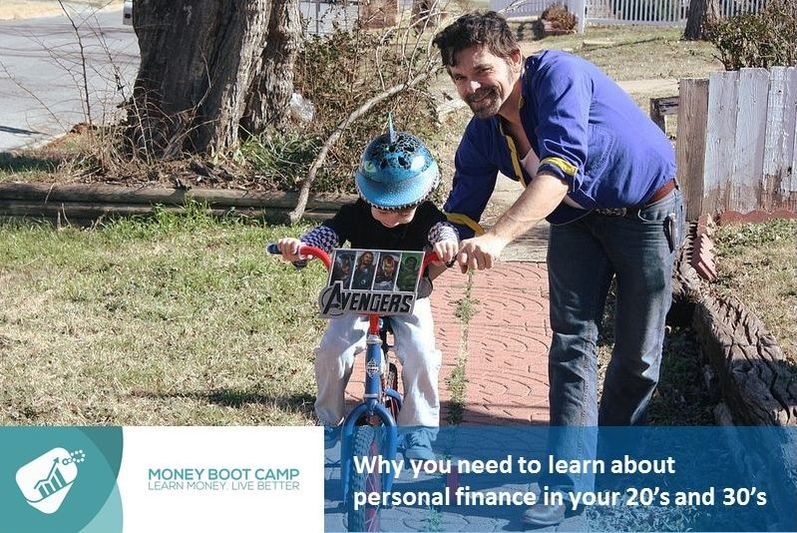 During this period you will be making some of your most important life decisions.
What career path to follow, whether to change jobs or wait for a promotion, when to start a family, should you buy that car, buy a home or keep renting, should you get married, how to get the money for that trip to Thailand. It’s difficult having so many decisions to make when you are trying to get established. You’re trying to balance your career, home and social life and you’re doing so from what feels like a crappy starting place. You’re near the start (or bottom) of your career and you feel like you don’t have a lot in your favour right now. Lucky for you, you’re probably wrong about that! In the early years you have less set expenses. Most people’s default position is to spend whatever they earn and when you’re starting to work, or a few years into working you’re not earning all that much compared to what you later will as you advance in your career. Even if your starting point is weak, you have time to improve and a few changes can make a big difference. Developing a few habits now can flip your reality in a short space of time, and put you on the path for wealth later. Aligning spending with values, lowering expenses, saving, learning to invest, working to get promotions and pay increases. Actively working on this can be life changing. Although possible at any stage, learning about this now gives you a distinct advantage. Any improvement you make is with you for life. You are still malleable. Change gets more difficult as you age and you haven’t built the financial baggage of set expenses people pick up over time. As you develop your money muscle your improvements compound. When you’ve lowered your expenses and increased your income, you realise you’ll reach your goals faster than planned. Setting bigger goals becomes the issue. A few months of a small difference in behaviour, you have built decent savings and options unimaginable before. You can afford a nice holiday, have a small emergency fund so don’t need to borrow money for an unplanned expense, and can afford to not work for a while. You have built a solid financial base to work from. Just like trying to get in shape for the first time, learning about personal finance and money management starts slow, but the achievements accumulate on top of each other and the more you do, the easier it gets. At Money Boot Camp we will show you how to build up your money muscles from zero to hero, while still in the formative years of your life. Making changes such as lowering your debt, getting a raise, choosing financial products, getting the right insurance, setting up a pension, investing, and all the other money moves you need to do can be tricky without the knowledge needed or having someone to guide you. You need to learn this stuff now while it can have the most benefit for you. |
Financial literacy leads to reduced stress, better decision making and the ability to plan to meet your personal goals.
Archives
February 2022
Categories
All
|
 RSS Feed